
Choosing Between Heat Transfer and Screen Printing Made Simple

You have a great design, a stack of blank shirts, and a clear idea of what you want the finished product to look like. Then comes the part that can make the project surprisingly complicated: choosing the right printing method.
eat transfer vs screen printing are both popular ways to customize apparel, but they are not designed for exactly the same jobs. One may be better for a small batch of detailed shirts, while the other can make more sense when you're producing a large order with a bold design.
The good news? You don't need to be a printing expert to make the right choice. Start with your design, order size, budget, and the type of garment you're working with.
First, Understand How Each Method Works
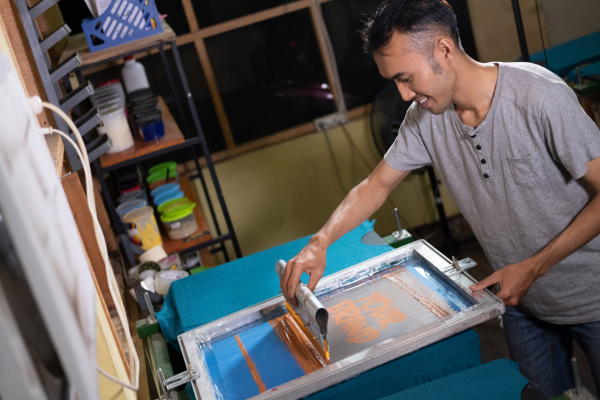
Screen printing uses a mesh screen and stencil to push ink directly onto the garment. Designs with multiple colors generally require separate screens for each color, which adds preparation time. Once the setup is complete, however, screen printing can be very efficient for larger orders.
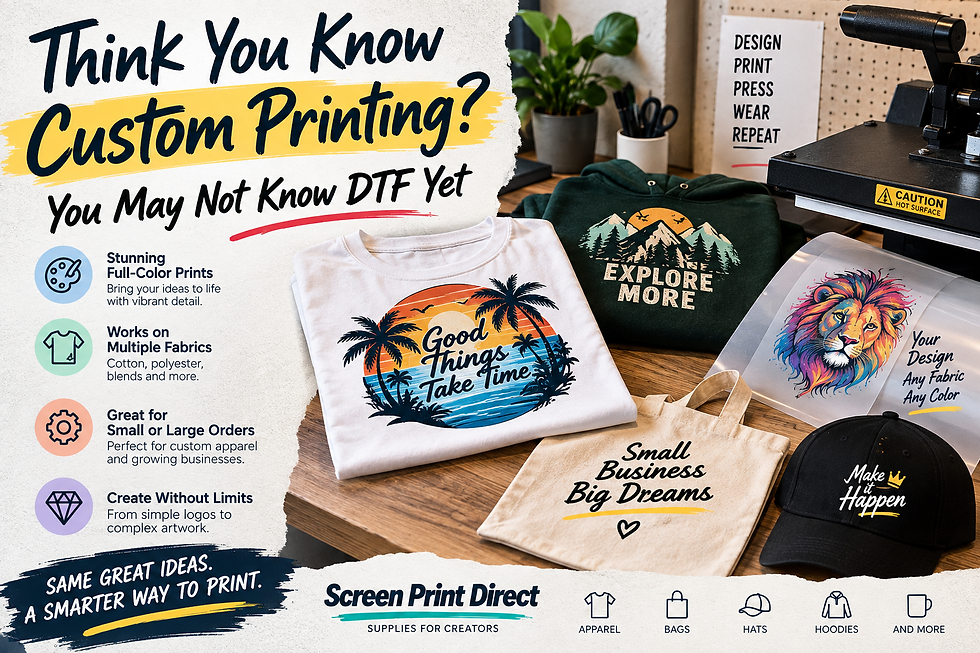
Heat transfer works differently. Instead of applying ink directly through a screen, the design is placed on transfer material and bonded to the garment using heat and pressure. Heat transfer can include several approaches, such as heat transfer vinyl (HTV), printable transfers, and DTF transfers.
That difference in the process is important because it affects cost, speed, design flexibility, and the overall feel of the finished shirt.
When Heat Transfer Makes More Sense
Imagine you need ten shirts for a school club, a family gathering, or a small business launch. You don't necessarily want to deal with extensive screen setup for such a small order.
This is where heat transfer can be convenient.
Heat transfer is particularly useful for:
Small orders
Personalized names and numbers
Detailed or colorful artwork
Designs that need frequent changes
Quick custom apparel projects
Home-based printing businesses
Because the method doesn't require creating a separate screen for every color, it can be easier to handle artwork with multiple colors or fine details. This makes it a practical option for beginners and creators testing new designs.
For someone starting a small custom t-shirt business, the simpler setup can also make it easier to accept different types of orders without investing immediately in a complete screen-printing setup.
When Screen Printing Has the Advantage
Now change the situation.
You need 200 shirts for a sports team, company event, school fundraiser, or promotional campaign. The design has three bold colors and will be printed on every shirt.
Screen printing starts looking much more attractive.
Although the initial setup can take more time, the cost per garment can become more favorable as the order quantity increases. Screen printing is also known for producing strong, vibrant prints that work particularly well with bold artwork.
It is often a good fit for:
Large apparel orders
Team shirts
Event merchandise
Company apparel
Bold logos
Simple designs with limited colors
The key is volume. A printing method that seems expensive for a small order can become much more economical when you're producing hundreds of identical garments.
What About Print Quality and Durability?
This is where things get interesting.
Screen printing has a long-standing reputation for durability because the ink is applied directly to the fabric and properly cured. It is especially popular for garments that will be worn and washed frequently.
Heat transfer quality depends heavily on the transfer material and application process. Modern DTF transfers, for example, can produce detailed, full-color artwork and work across a broad range of fabrics. However, not every heat transfer product performs the same way.
So rather than assuming one method is always more durable, consider the specific transfer material, garment, application settings, and care instructions.
Don't Ignore the Fabric
Your blank shirt matters almost as much as your artwork.
Cotton, polyester, cotton blends, fleece, and performance fabrics can respond differently to various printing methods. Some heat transfer products are designed for a wider selection of materials, while screen printing may require different inks depending on the fabric.
If you're printing sportswear, for example, check whether your chosen method is suitable for synthetic fabric before producing the entire order.
A simple test print can save you from an expensive mistake.
Think About Your Budget
Cost isn't just about the price of ink or transfer material.
With screen printing, you also have to consider screens, preparation, equipment, ink, cleanup, and production time. Those setup costs can make smaller orders less attractive, but they can be spread across a larger number of shirts when producing in bulk.
Heat transfer can have a lower barrier to entry, particularly for creators working with a heat press and purchased transfers. That can make it appealing to hobbyists, students, and small businesses working with limited budgets.
If you're a student building a small apparel project, looking for student discounts on printing equipment and supplies can also help reduce the initial investment.
Heat Transfer vs. Screen Printing: Which Should You Choose?
There isn't one winner for every project.
If you're working on a small quantity, need personalization, or have a highly detailed design, heat transfer may be the easier choice.
If you're producing a large quantity of shirts with a bold, repeatable design, screen printing may offer better efficiency and value.
The simplest way to decide is to ask yourself four questions:
How many shirts am I making?
How complicated is my design?
What fabric am I printing on?
How much can I spend on setup and production?
Those answers will usually point you in the right direction.
A Smarter Way to Choose
The best printing method isn't necessarily the newest one or the one someone else recommends. It's the method that fits the job in front of you.
For a handful of personalized shirts, heat transfer can keep things flexible. For a large run of consistent designs, screen printing can make production more efficient. And if you're building a business, learning both methods can give you more freedom to take on different types of orders.
Before buying equipment or placing a large order, test your artwork and fabric combination first. A little preparation can help you avoid wasted shirts, unnecessary expenses, and disappointing results.
In the end, choosing between these two methods becomes much simpler when you stop asking, "Which one is better?" and start asking, "Which one is better for this particular project?"


Comments