
Think You Know Custom Printing? You May Not Know DTF Yet

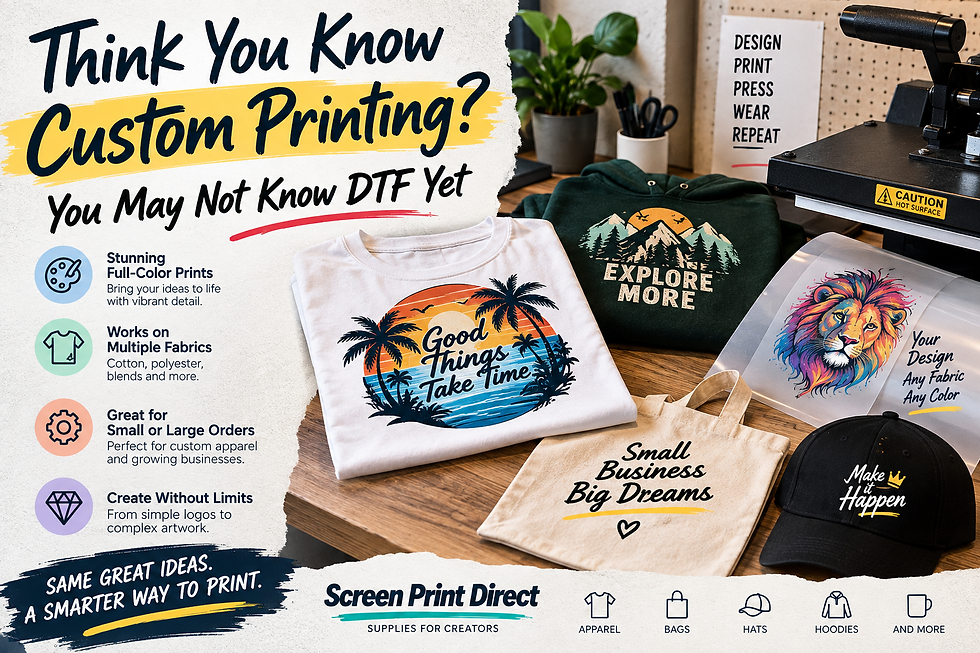
A detailed graphic on a T-shirt can look simple when you see the finished product. But getting that design onto the fabric can involve several different printing techniques, each with its own process.
Most people know about screen printing. Some have heard of heat transfer vinyl or sublimation. But ask about DTF printing, and many may not know what it means.
That is changing quickly.
Direct-to-film printing has become an interesting option for custom apparel because it combines digital artwork with a heat-transfer process. It can produce colorful, detailed designs without requiring the same setup used for traditional screen printing.
DTF Is Not Quite What Its Name Suggests
The name Direct-to-Film can be confusing at first.
The design does not go directly from the printer onto the T-shirt. Instead, artwork is printed onto a special transfer film. Adhesive powder is added to the printed design, and the transfer is cured before being applied to fabric with a heat press.
Think of the film as a temporary home for the artwork.
Once the transfer is ready, it can be moved onto a garment. This simple difference is one of the reasons DTF has attracted attention among custom clothing businesses and independent creators.
Why Are People Turning to DTF?
One of the biggest attractions is design flexibility.
Traditional screen printing can work extremely well for certain projects, particularly larger orders with designs that use a limited number of colors. However, detailed artwork with photographs, gradients, shadows, and numerous colors can require more preparation.
DTF takes a digital approach.
A printer can prepare the artwork on a computer, print it onto film, and then transfer it to the garment. This makes the process appealing for custom T-shirts, personalized clothing, small orders, promotional apparel, and other projects where designs may change frequently.
It also means you do not necessarily have to produce hundreds of identical shirts to make a colorful design worthwhile.
How Does the Process Actually Work?
The finished shirt may be the part everyone notices, but the interesting work happens before the transfer reaches the fabric.
Start With the Design
Everything begins with artwork.
A design is prepared digitally and sized according to the garment and desired placement. Transparent areas, colors, edges, and fine details should be checked before printing.
A clean design file can make a noticeable difference in the final result.
Print the Artwork
The artwork is printed onto specially coated DTF film using compatible inks.
White ink plays an important role because it provides a base that helps the colors remain visible, particularly when the design is going onto a dark garment.
Add the Adhesive Powder
After printing, hot-melt adhesive powder is applied to the printed area.
This step is important because the powder creates the bonding layer that allows the design to attach to the fabric during heat pressing.
Cure the Transfer
The transfer is then heated to cure the adhesive.
Curing needs to be handled carefully. Incorrect settings can affect how the transfer bonds and may contribute to problems later.
Apply It With a Heat Press
Once prepared, the transfer is positioned on the garment.
The heat press applies the required combination of temperature, pressure, and time. These settings can vary depending on the transfer materials and fabric, so following the manufacturer's recommendations is important.
Peel and Finish
After pressing, the film is removed according to the recommended peeling method.
What remains is the printed design bonded to the garment.
It sounds straightforward, but getting consistent results comes from understanding each stage rather than simply pressing a transfer onto a shirt.
DTF Printing vs. Screen Printing
This is where things get interesting.
DTF and screen printing are not competitors in every situation. They solve different production needs.
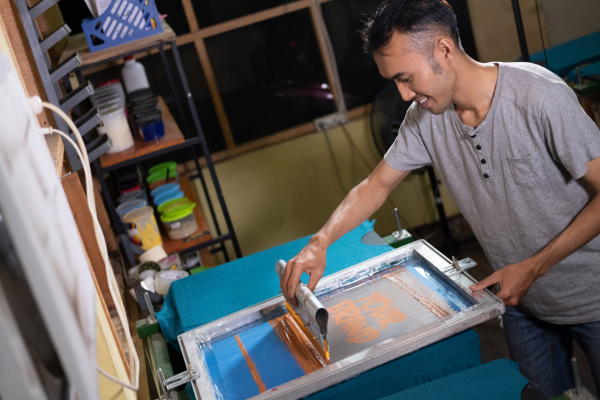
Screen printing is well suited to many bulk orders and can produce durable, professional results. It is particularly useful when the same design needs to be printed repeatedly.
DTF, meanwhile, can be convenient for detailed artwork, colorful graphics, personalized designs, and smaller quantities.
The right choice depends on the project.
Someone producing hundreds of shirts with a simple logo may approach the job differently from someone creating ten personalized shirts featuring different full-color designs.
That is why learning more than one printing method can be useful for a print shop.
What Are DTF Transfers?
A DTF transfer is essentially the finished printed design before it is applied to a garment.
This opens up an interesting production option. Instead of printing directly onto clothing every time an order arrives, transfers can be prepared in advance and stored until they are needed.
For businesses handling multiple designs, this can make production more flexible.
DTF transfer sheets can also be useful when working with individual designs or smaller projects, while larger film formats can accommodate multiple graphics.
Another popular concept is the DTF gang sheet, where several designs are arranged together on one sheet to make better use of the available film.
Don't Confuse DTF With Every Printing-Related Term
When researching printing, it is easy to fall down a rabbit hole of unfamiliar terminology.
You might come across subjects such as bleach vs alcohol, cleaning solutions, solvents, inks, pretreatment, curing, and other chemical-related terms.
But not every term you encounter applies directly to DTF production.
DTF requires materials specifically designed for the process, including compatible film, ink, adhesive powder, and equipment. Printer maintenance should also follow the instructions supplied for the particular machine rather than relying on general cleaning advice found elsewhere.
That distinction matters because using the wrong material can create printing problems or damage equipment.
What Do You Need for DTF Printing?
You do not need to buy every piece of equipment available on the market to understand the basics.
A typical DTF setup may include:
A compatible DTF printer
DTF-compatible inks
DTF transfer film
Hot-melt adhesive powder
A curing solution or curing equipment
RIP software
A heat press
Suitable garments
The equipment you need will depend on whether you are experimenting with DTF at home, producing custom shirts for customers, or operating a larger apparel business.
For beginners, learning the workflow before investing heavily in equipment can be a smart starting point.
Where Does Screen Print Direct Fit In?
For people already familiar with screen printing, adding DTF to their knowledge can open another route for producing custom apparel.
Screen Print Direct offers products and supplies for different printing applications, including DTF-related materials and equipment.
Whether you are researching DTF film, transfers, inks, or the overall printing process, understanding how each component works together is more useful than simply purchasing equipment and hoping for consistent results.
Is DTF the Future of Custom Apparel?
There is no single printing method that works perfectly for every project.
That is the important point.
DTF printing gives apparel decorators another way to handle detailed, colorful, and personalized artwork. Screen printing remains valuable for many types of production, while other methods such as sublimation and vinyl have their own applications.
The more printing techniques you understand, the easier it becomes to choose a process based on the design, material, quantity, and desired result.
And if you have never explored DTF before, you may be surprised by how much goes into creating that seemingly simple design on a T-shirt.
Sometimes, the printing method you know least about is the one worth learning next.

Comments